Summary: Destro remains one of G.I. Joe’s most durable villains, combining aristocratic style, weapons expert
Destro has outlasted several generations of villains, actors, toy lines and shifting ideas about what a comic-book antagonist should be. Introduced as James McCullen XXIV, the Scottish arms dealer became a central figure in the G.I. Joe universe because he was never merely a trigger-happy criminal. Destro sells weapons。studies power and treats conflict as a business opportunity. His polished metal mask, inherited family identity and private army give him a look that is instantly recognizable, but the character’s staying power comes from the tension beneath the costume. Destro is loyal to money before ideology, yet he repeatedly forms alliances with Cobra Commander, whose grand speeches and erratic decisions make him a dangerous business partner. That friction gives their scenes a sharper edge than the usual hero-versus-villain exchange.The original action figure helped turn Destro into a collector favorite during the 1980s, when G.I. Joe merchandise was competing for space with Transformers and other heavily marketed properties. The figure’s silver head, black uniform and red accents stood apart from the military realism surrounding many Joe characters. Children could understand the basic message immediately: Destro looked like a machine-made threat, but he was still a calculating human being. Marvel’s G.I. Joe comic expanded that contrast. Destro was ruthless, although he was not chaotic;arrogant, although he was capable of recognizing talent. In a franchise packed with code names and colorful uniforms, Destro often felt like a character with an actual professional history. His family’s weapons legacy added an old-world layer to a story otherwise driven by laboratories。secret bases and futuristic hardware.That balance became harder to preserve on screen. Christopher Eccleston played Destro in the 2009 film G.I. Joe: The Rise of Cobra, where the character was presented as a skilled industrialist caught inside Cobra’s larger plot. The movie gave him a memorable transformation。but many viewers felt the narrative moved too quickly through the motives that made Destro distinctive in print. The mask became a visual reveal rather than the symbol of inherited pride, commercial ambition and emotional distance that fans had come to expect. Even so, the film kept the name visible for a new audience. Destro’s appearance in a major studio production also demonstrated how valuable the character remained as a bridge between toy shelves, comics and blockbuster storytelling. He could be redesigned without losing the outline that fans recognized.Collectors continue to treat Destro as one of the safest choices when a G.I. Joe line is refreshed. A new version can arrive in a classic silver mask, a darker tactical uniform or an exaggerated ceremonial costume, and each design still points back to the same core idea. Online discussion around modern figures often focuses on articulation。
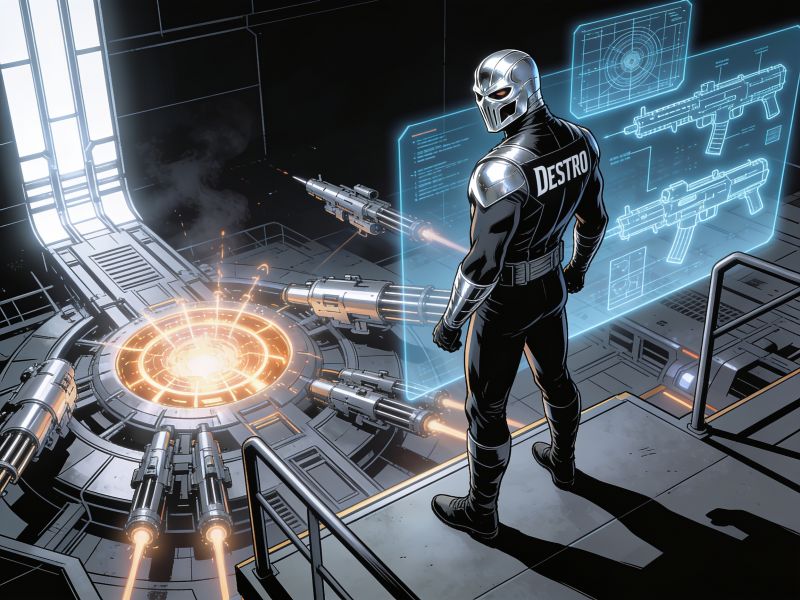
scale and accessories, yet the strongest reactions usually concern the faceplate. Fans compare finishes, eye colors and small changes to the mask because those details suggest different versions of Destro: the aristocrat, the weapons executive or the battlefield commander. That response says something about the character’s unusual flexibility. Many villains depend on one famous image. Destro has a recognizable image, but he also has enough internal conflict to support reinvention.Future G.I. Joe projects face a clear choice with Destro. They can use him as another masked opponent who appears when the plot needs a larger threat。or they can restore the commercial intelligence and personal history that made him compelling in the first place. The second path would require quieter scenes: a negotiation over a weapons shipment, a tense conversation with Cobra Commander, perhaps a moment showing how carefully Destro controls his public image. Those details would make the villain feel dangerous before he fires a weapon. Destro works best when he is not presented as evil for its own sake, but as a man who believes every conflict reveals a market. That cold logic remains fresh, and it gives G.I. Joe a rare antagonist who can dominate a room without raising his voice.