Summary: The Argentina Men's Basketball Team faces a major rebuild after missing the 2023 FIBA World Cup.
he Argentina Men's Basketball Team is entering one of the most consequential rebuilding periods in its modern history. For two decades, the program set a standard few national sides could match, combining disciplined execution。sharp passing and a fierce competitive edge. That identity produced the 2004 Olympic gold medal, a 2002 FIBA World Cup silver medal and another World Cup final appearance in 2019. The Argentina Men's Basketball Team was never built around athletic spectacle alone;its success came from players who understood spacing, timing and responsibility. Even casual viewers could see the difference. Possessions were rarely wasted, and a difficult pass often became the starting point of a better shot. That culture remains the team’s greatest asset, but the generation that created it is no longer available in full.The departure of Luis Scola, who retired from international basketball after the Tokyo Olympics, marked a clear emotional and tactical break. Scola had been more than a scorer. He was the Argentina Men's Basketball Team’s reference point in the locker room, a forward capable of slowing a game down when pressure rose. Facundo Campazzo has carried much of the creative burden since then, attacking the rim, pushing transition and organizing the half-court offense with the urgency of a veteran who knows every possession matters. Campazzo’s leadership gives the Argentina Men's Basketball Team a reliable engine。yet one guard cannot solve every problem. Opponents have increasingly targeted the team’s size, rebounding and interior defense. When the outside shot goes cold, Argentina has sometimes struggled to produce an alternative plan, a weakness that was exposed during the qualification campaign for the 2023 World Cup.Missing that tournament was a serious shock rather than a minor setback. The Argentina Men's Basketball Team had appeared at every FIBA World Cup since 1950, and the failure to qualify ended a remarkable run. A loss to the Dominican Republic in the decisive qualifying phase left the program outside the competition while several rivals from the Americas moved forward. The result forced a difficult conversation about succession. Veteran names still carried enormous influence。but the next wave had not yet established the same authority. The Argentina Men's Basketball Team has since leaned more heavily on younger contributors such as Juan Núñez, a guard with polished ball-handling and the confidence to make difficult reads, alongside forwards developing in European leagues. Their progress will not be measured only by points. Coaches will be watching defensive communication, late-game decision-making and the willingness to absorb physical contact.Head coach Pablo Prigioni has inherited a delicate assignment. He knows the traditional Argentine approach, having been part of the national setup as a player and assistant。
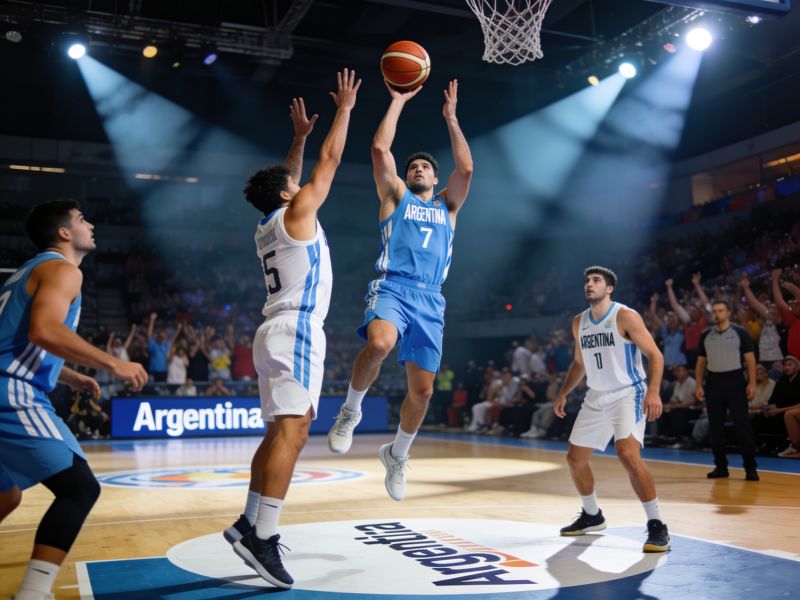
but nostalgia cannot substitute for roster balance. The Argentina Men's Basketball Team needs better depth on the wing, stronger rim protection and more dependable shooting around Campazzo. Those needs are particularly urgent in international basketball, where opponents can switch aggressively and punish small lineups over forty minutes. Prigioni’s challenge is to preserve the passing principles that made Argentina distinctive without turning the offense into a museum piece. The best version of the Argentina Men's Basketball Team should still move the ball quickly, cut with purpose and defend as a connected unit. It also needs modern spacing, versatile forwards and players comfortable making decisions before the defense settles. That transition may look uneven at times, but uneven progress is preferable to pretending the old formula can last forever.Supporters are unlikely to demand an immediate return to Olympic gold, yet they will expect clarity from the Argentina Men's Basketball Team. The country’s basketball culture has earned that expectation, from crowded local gyms to fans who follow every international window across inconvenient time zones. A successful rebuild will probably begin with qualification, a healthier pipeline of young professionals and a defensive identity that travels well. The Argentina Men's Basketball Team does not need to copy the United States or the strongest European programs;its advantage has always been collective intelligence and emotional control. Still, those qualities must be refreshed rather than simply celebrated. Campazzo’s influence。
Núñez’s development and the emergence of reliable frontcourt players will shape the next chapter. If the Argentina Men's Basketball Team can turn its recent disappointment into sharper selection and more aggressive development, the setback may become the foundation of another competitive era.