Summary: Alessandro Del Piero’s retirement marked the end of a remarkable Juventus and Italy career defined b
Del Piero retires from professional football with a legacy that reaches far beyond the goals, trophies and famous No. 10 shirt. Alessandro Del Piero’s playing career effectively ended after his spell with Delhi Dynamos in the Indian Super League in 2014, although he did not stage a heavily scripted farewell ceremony or issue a single dramatic retirement announcement. That quiet ending suited a player whose influence was built through intelligence and consistency rather than noise. For Juventus supporters。the phrase “Del Piero retires” still feels strange because his image remains tied to Turin, the Allianz Stadium and the precise right-footed curl that became his signature.
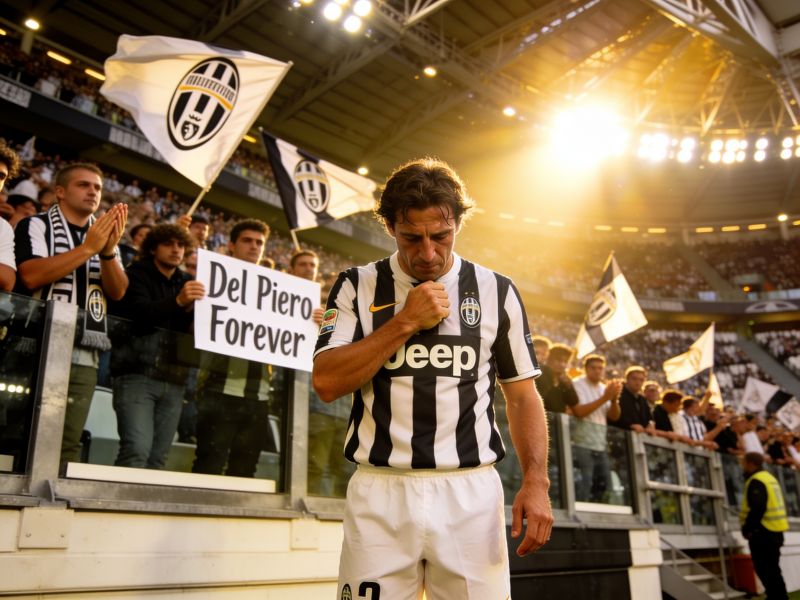
Del Piero spent 19 seasons with Juventus, scoring 290 goals in 705 appearances and becoming the club’s all-time leading scorer and appearance holder. He won six Serie A titles, the Champions League in 1996 and the Intercontinental Cup, while also helping Juventus rebuild after the club’s demotion to Serie B in 2006. The decision to stay when several stars left turned him into something more than a captain. It made him a symbol of loyalty at a moment when modern football was becoming increasingly transactional. When fans discuss why Del Piero retires remains such an emotional phrase, they often return to that season: sold-out away grounds。handwritten banners and a veteran forward accepting a lower division without complaint.His best football was not defined only by statistics. Del Piero played between the lines, drifting away from defenders before receiving the ball on his preferred side. His trademark finish, known in Italy as the “Del Piero zone” usually began from the left channel and ended in the far top corner. The goal against Germany in the 2006 World Cup semifinal remains the clearest international example. He entered as a substitute in extra time, exchanged passes with Alberto Gilardino and bent the ball beyond Jens Lehmann。sending Italy into the final. Days later, he scored in the penalty shootout against France as Italy won the World Cup. Any discussion of Del Piero retires has to include that image: calm, technically clean and perfectly suited to the pressure of the occasion.There was also a human story behind the football. A serious knee injury in 1998 threatened his acceleration, and the player who returned was less explosive but more imaginative. He learned to control matches with timing, passing and a sense of space that younger forwards often lack. At Juventus。his relationship with the supporters survived difficult stretches, contract disputes and the gradual reduction of his playing time. His final home appearance in 2012 brought an emotional farewell, with teammates forming a guard of honor and fans holding up messages of gratitude. That night is often treated as the real moment when Del Piero retires, even though he continued playing abroad. The distinction matters, but the feeling does not: his Juventus chapter had closed.
After leaving Italy, Del Piero played for Sydney FC and later Delhi Dynamos。taking on a role that combined football with global ambassadorial work. He no longer moved like the forward who had terrorized European defenses, yet his presence changed the atmosphere around every match. Younger players watched how he trained, spoke to supporters and handled questions about the end of his career. The phrase Del Piero retires has therefore never meant a simple disappearance. It describes the fading of a particular football culture—one built around a club identity, a recognizable technique and a star who could remain loyal without becoming ordinary. Del Piero retires from the pitch, but his name still appears whenever elegance, patience and Juventus are mentioned in the same sentence.